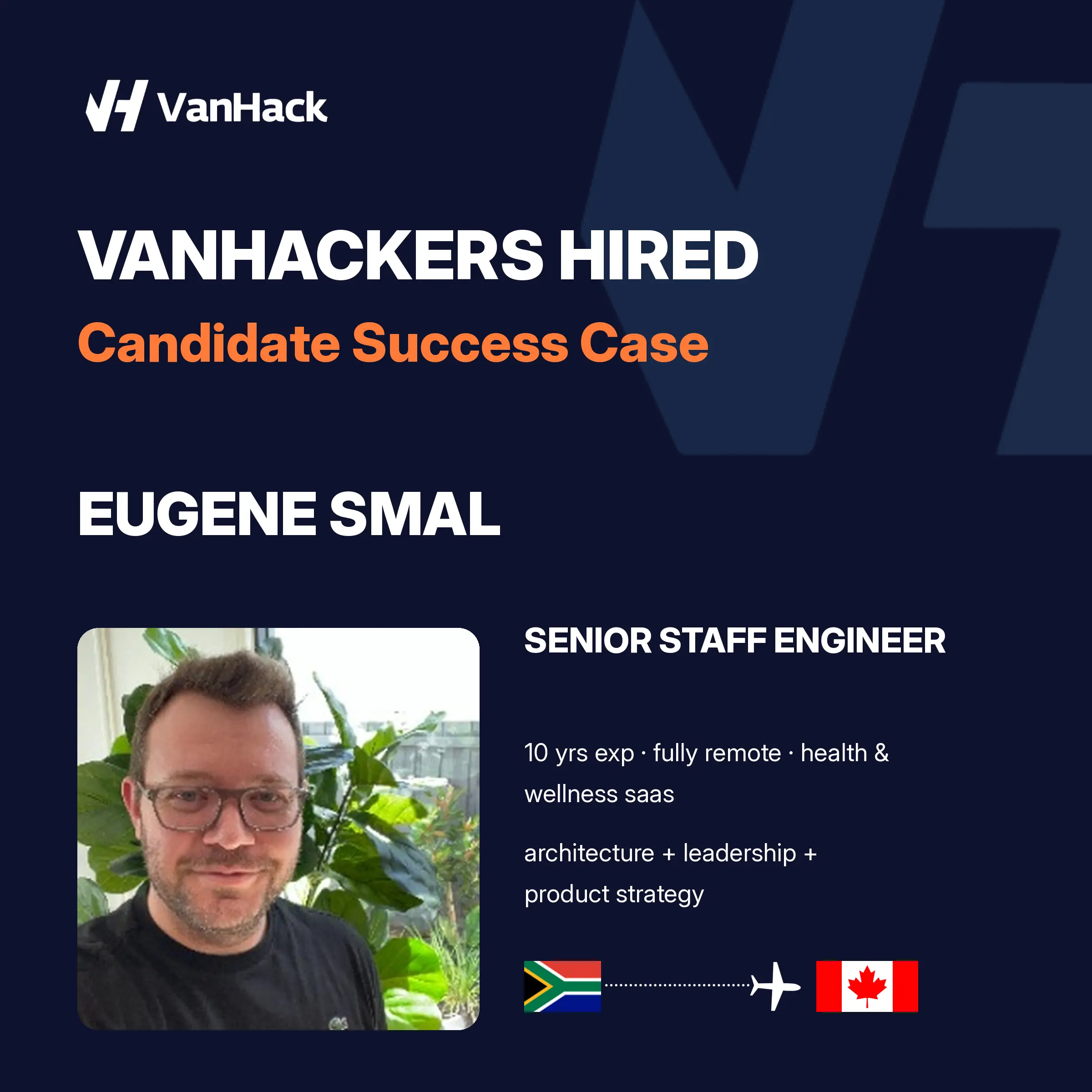
This week, we launched something I’m really excited about: our Slack integration for Vanna, VanHack’s Tech Recruiting Agent.
On paper, it sounds simple. Bring recruiting intelligence into Slack. Let the team get updates, discuss candidates, and act faster without jumping between tools. But the impact was immediate.
One of the first big wins was helping us make a VP-level hire named Eugene. That was the moment it clicked for me. The real value of this integration is not just automation, it’s momentum. Recruiting is full of small delays: someone misses an update, a candidate sits too long without follow-up, context gets buried in a spreadsheet, or the right person does not see the opportunity quickly enough.
By bringing Vanna into Slack, we put the right signal directly where the team was already working. People could see what mattered, discuss it in real time, and move together. For a senior hire, that speed and alignment can make all the difference.
Building this also taught me something important: great integrations are not about adding another tool. They are about reducing friction. If software asks people to change their habits too much, it gets ignored. But when it fits into the workflow people already use every day, it becomes powerful. Slack is where our team makes decisions, so Slack became the natural place for Vanna to help.
The next step is making this even more proactive. We want Vanna to help surface strong candidates, flag opportunities, summarize activity, and support recruiters before they even have to ask. Eugene’s hire gave us a glimpse of what this can become: a faster, smarter recruiting workflow where AI supports the team in real time. And honestly, that feels like just the beginning.
What the Slack Integration Actually Does
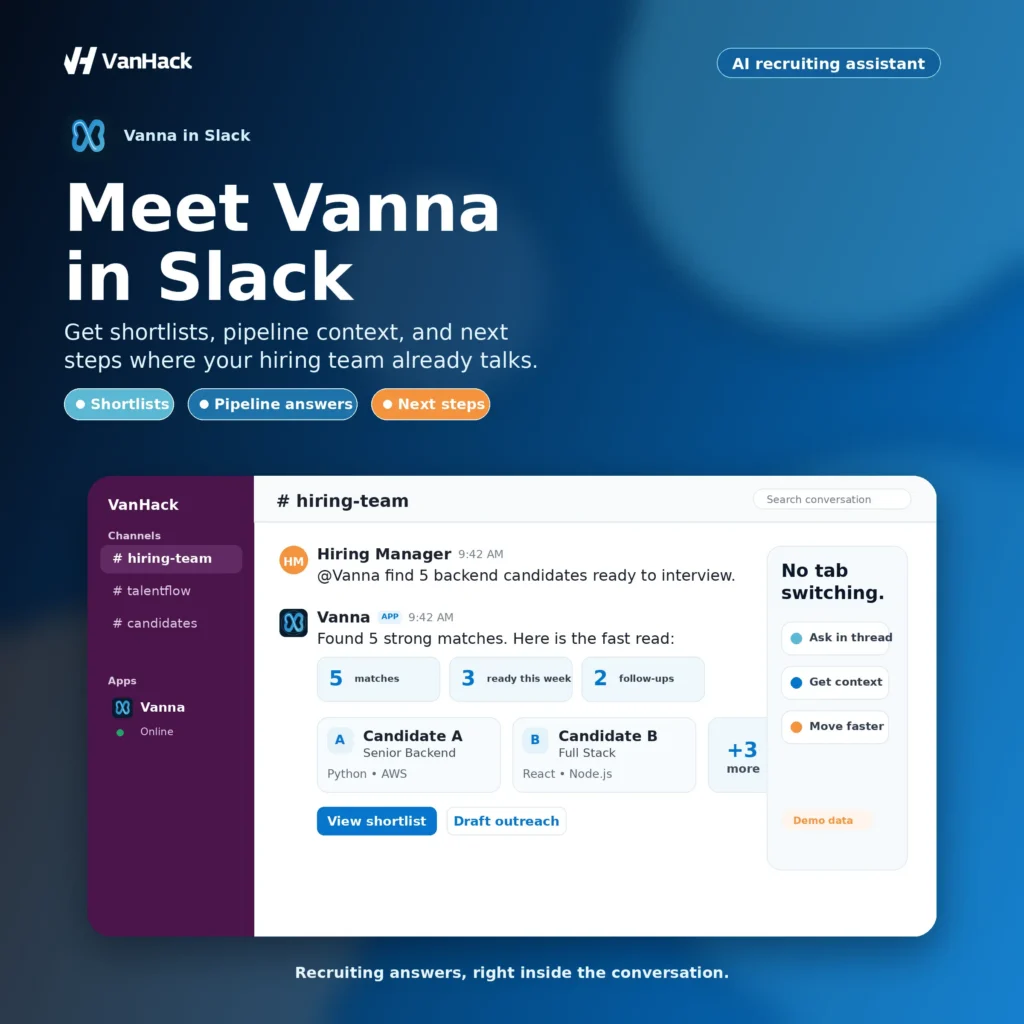
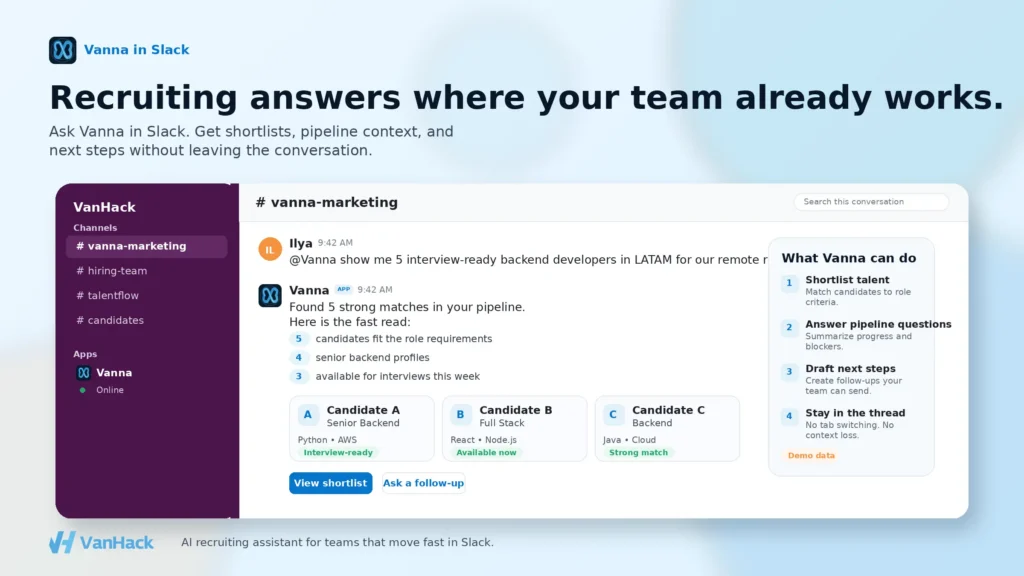
For those curious about the mechanics, here is what Vanna does inside Slack:
- Posts real-time candidate updates directly into designated channels so the whole team stays in the loop without anyone having to chase it down.
- Surfaces top-matched candidates with relevant context so hiring managers can react quickly, not days later.
- Enables in-thread discussions on specific candidates, keeping feedback organized and tied to the right person instead of scattered across DMs or email.
- Sends proactive alerts when a strong candidate has been inactive in the pipeline for too long, reducing the risk of losing great people to silence.
The goal was never to replace the recruiter. It was to make the recruiter faster by putting the right information in front of the right people at exactly the right moment.
Why Speed Matters More Than Ever in Senior Hiring

Senior and VP-level candidates move fast. They are usually fielding multiple conversations at once, and they form impressions of your company based on how you engage them in those first few touchpoints.
When your team takes three days to respond because an update got buried in an ATS that no one checks religiously, you are not just losing time. You are sending a signal about how you operate. Top candidates notice.
Bringing Vanna into Slack cut that lag dramatically. The team saw Eugene’s profile, had a quick discussion in the thread, and aligned on next steps within hours. That kind of internal speed translates directly into a better candidate experience. Eugene later mentioned that the process felt unusually smooth and decisive.
What Vanna Looks Like In Native Slack Integration
Lessons for Any Team Thinking About AI in Recruiting
If you are considering layering AI into your recruiting process, here are a few things we learned that might save you some time:
- Meet your team where they already are. If everyone lives in Slack, build there. Do not ask people to adopt a new tool on top of the tools they already use.
- Start with one pain point. For us, it was update latency and team alignment. Pick the thing that causes the most friction and solve that first.
- Make the AI an amplifier, not a replacement. Vanna surfaces information and prompts action. The humans still own the judgment calls, the relationships, and the final decisions.
- Measure momentum, not just metrics. The real win with Eugene was not a faster time-to-offer number. It was the energy and clarity the team had throughout the process.
What Is Coming Next
Eugene’s hire was proof of concept. Now we are building toward something more ambitious.
We want Vanna to be genuinely proactive: not just reporting what is happening in the pipeline, but helping the team anticipate what to do next. Think intelligent nudges when a strong candidate has gone quiet, smart summaries before a debrief call, or automatic flagging when a role is at risk of going cold.
The integration is also going to get smarter about context. Right now, it surfaces signals. Soon, it will start connecting dots across roles, candidates, and timing in ways that would take a human recruiter hours to piece together manually.
We are building toward a world where recruiting teams are not buried in coordination and follow-up. They are focused on the conversations that actually matter. Vanna handles the rest.
Ready to Bring This to Your Team?
If your recruiting team is losing time to slow handoffs, buried updates, or a pipeline that moves slower than your best candidates will tolerate, Vanna was built for exactly that problem.
Have questions or want a walkthrough? We are happy to show you exactly how it works.
Have questions or want a walkthrough? Drop us a note. We are happy to show you exactly how it works.