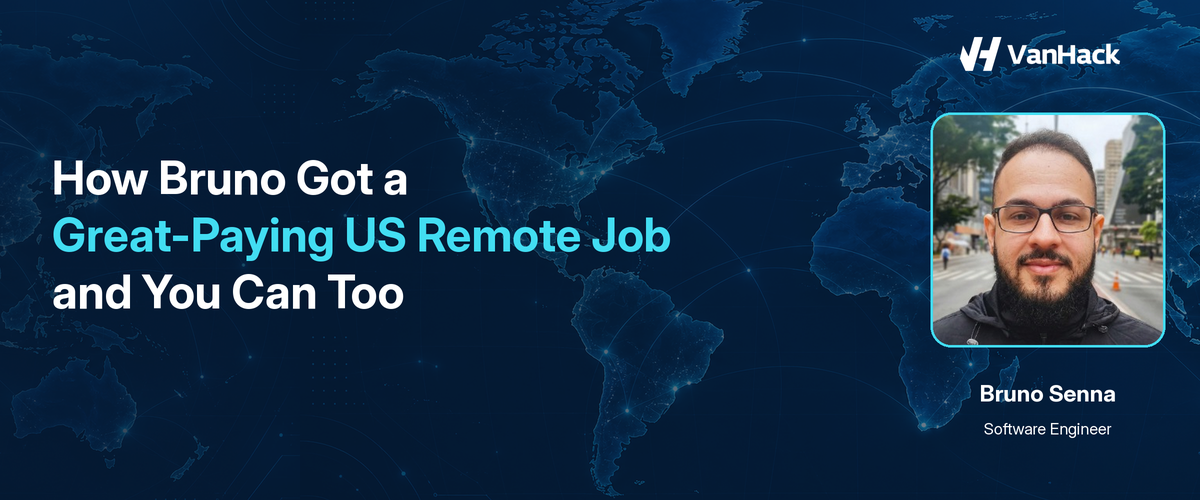
A friend’s recommendation started the conversation. Preparation helped Bruno Senna make the opportunity his own.
Bruno Senna landed a US remote software job while living in Brazil. The opportunity came through a friend who recommended VanHack and encouraged him to apply for a role that matched his background. From there, Bruno completed his profile, worked with the recruiting team, practiced his interviews and progressed through the employer’s hiring process.
Speaking with Ilya Brotzky in a recorded interview, he describes a path that was neither his first international application nor a leap into an unfamiliar profession. He already had software development experience and had worked with a US company before. What made this opportunity stand out was the fit, the preparation and having someone to talk to along the way.
Watch Bruno Senna’s full interview on YouTube to hear his experience in his own words, then explore the key lessons below.
A referral opened the door, but fit mattered
For Bruno, working with a US company appealed for more than one reason. Earning in dollars mattered, but so did a working culture he felt suited him. This remote role allowed him to work internationally while continuing to live in Brazil.
A friend pointed him toward a specific opening and thought their similar professional backgrounds made it worth exploring. Bruno filled out his profile and began talking with the recruiting team. He remembers this hiring process moving quickly, although he does not give an exact timeline.
That distinction is important: the recommendation created a connection, not a guaranteed offer. Bruno still needed to demonstrate his skills and decide whether the company felt right for him. He had tried other opportunities before that did not work out.
Mock interviews refined the details
Even after many interviews in his career, Bruno found the practice useful. He recalls taking part in two mock interviews through VanHack. The feedback focused on small details: how he explained an answer, what he could adjust and where he could communicate more clearly.
The employer’s process included conversations and a coding test. Bruno describes a mix of technical and behavioral questions, with attention to how he approached challenges, handled day-to-day difficulties and worked as part of a team.
His takeaway is practical. Interview preparation is not only about knowing another technical answer. It is also about making your reasoning understandable to someone who has limited time to get to know you. In his case, feedback helped him refine what he already knew before the employer conversations.
English confidence did not mean waiting for perfection
Bruno puts confidence in English near the top of his advice for international applicants. He does not describe his English as perfect. What mattered was being willing to speak, understand the conversation and explain his capabilities.
His learning combined classes with everyday exposure: videos, films, music and other content in English. Over time, the language became part of what he consumed rather than something reserved for an interview.
Asked whether he waited until he felt fully confident before pursuing international interviews, he says he went ahead anyway. That is not an argument against preparation. It is a reminder that preparation and taking action can happen together.
“I did it anyway because it’s better done than perfect.”
A remote role still needs clear communication
Bruno’s background spans frontend and backend development, including React, TypeScript, .NET and C#. At the time of the interview, he says much of his work was on the backend. He speaks positively about the company and the fit he felt during the hiring conversations.
The working arrangement also suits his preference for later hours. He describes flexibility around how he organizes his day, alongside important meetings, team communication and the expectation that he delivers his work.
This is his experience with his team, not a promise that every US remote job offers the same schedule. The useful lesson is to understand how a team works: when you need to be available, how you stay responsive and what good delivery looks like.
A person to talk to made the process different
Later in the conversation, the discussion turns to applications that receive no response and the experience of AI interviews. Bruno contrasts that frustration with having a recruiter he could speak to during his own process.
He valued the back-and-forth communication and knowing what was happening. Alongside the mock interviews, that human point of contact is one of the clearest benefits he identifies in his experience with VanHack.
For developers considering a similar move, his story points to work they can start now: present relevant experience clearly, practice explaining technical decisions, strengthen English through regular use and seek feedback before the next interview. A referral can start a conversation; preparation helps you make the most of it.
Ready to explore your own next step? Explore international tech opportunities with VanHack, or watch Bruno Senna’s full interview to hear his experience firsthand.