Already have a strong software engineering job with an international company, but want to build your life in Canada? VanHack’s Move to Canada Program is designed to help eligible engineers relocate without first giving up the work, team, and employer they already know.
What is VanHack’s Move to Canada Program?
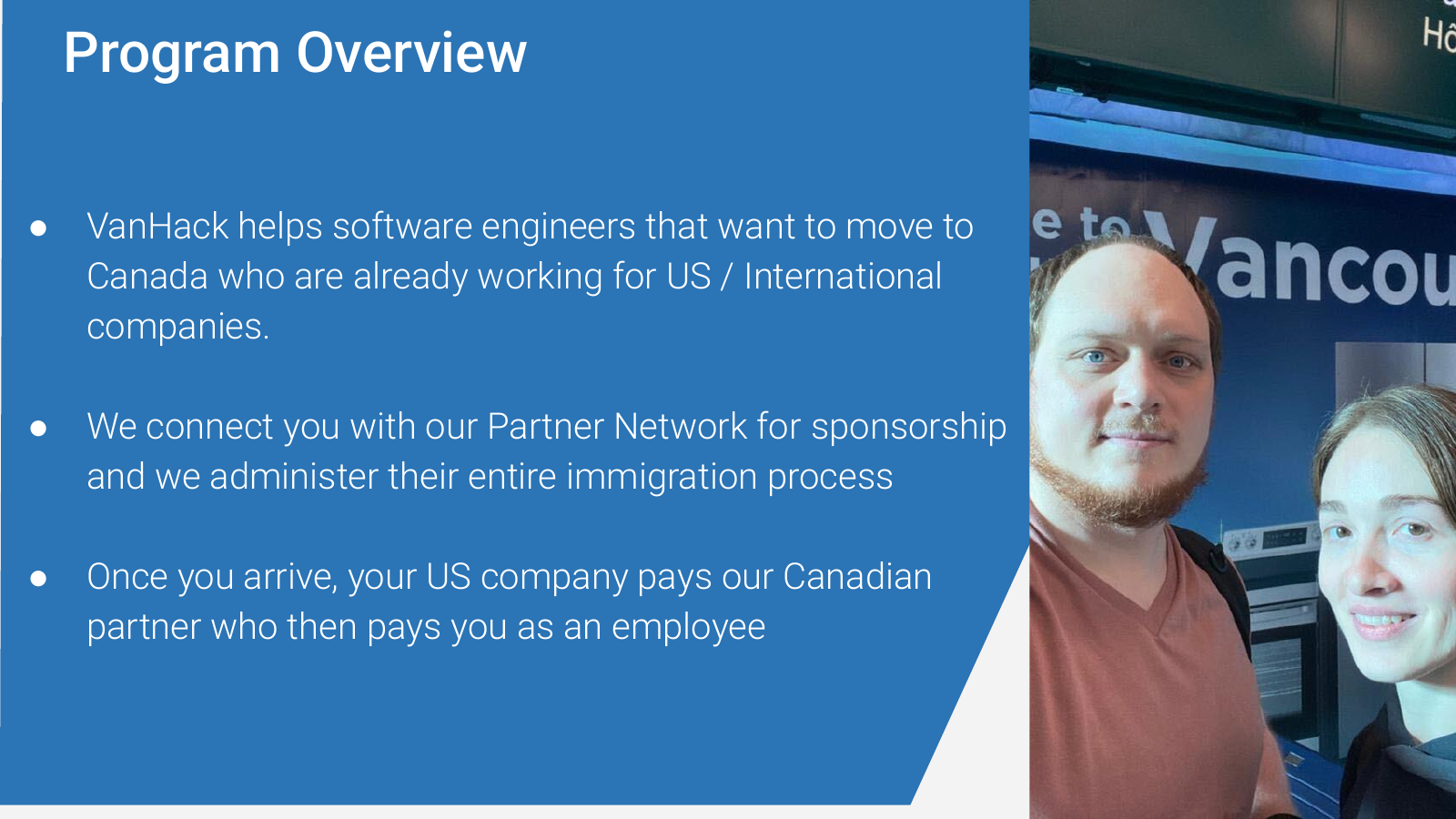
The program creates a bridge between an eligible software engineer, their current international employer, and VanHack in Canada.
Instead of searching for a new Canadian job before relocating, an approved participant can continue working on projects for their current company from Canada. VanHack becomes the engineer’s Canadian Employer of Record, while the original employer enters into a commercial agreement with VanHack.
In practical terms, the engineer keeps contributing to the same company and projects, but is employed and paid in Canada through VanHack’s Canadian entity. VanHack also coordinates the work permit process with its Global Mobility team and licensed immigration professionals.
Who is the program designed for?
The current program is aimed at software engineers who already have stable work with an international company and want to relocate to Canada while continuing that professional relationship.
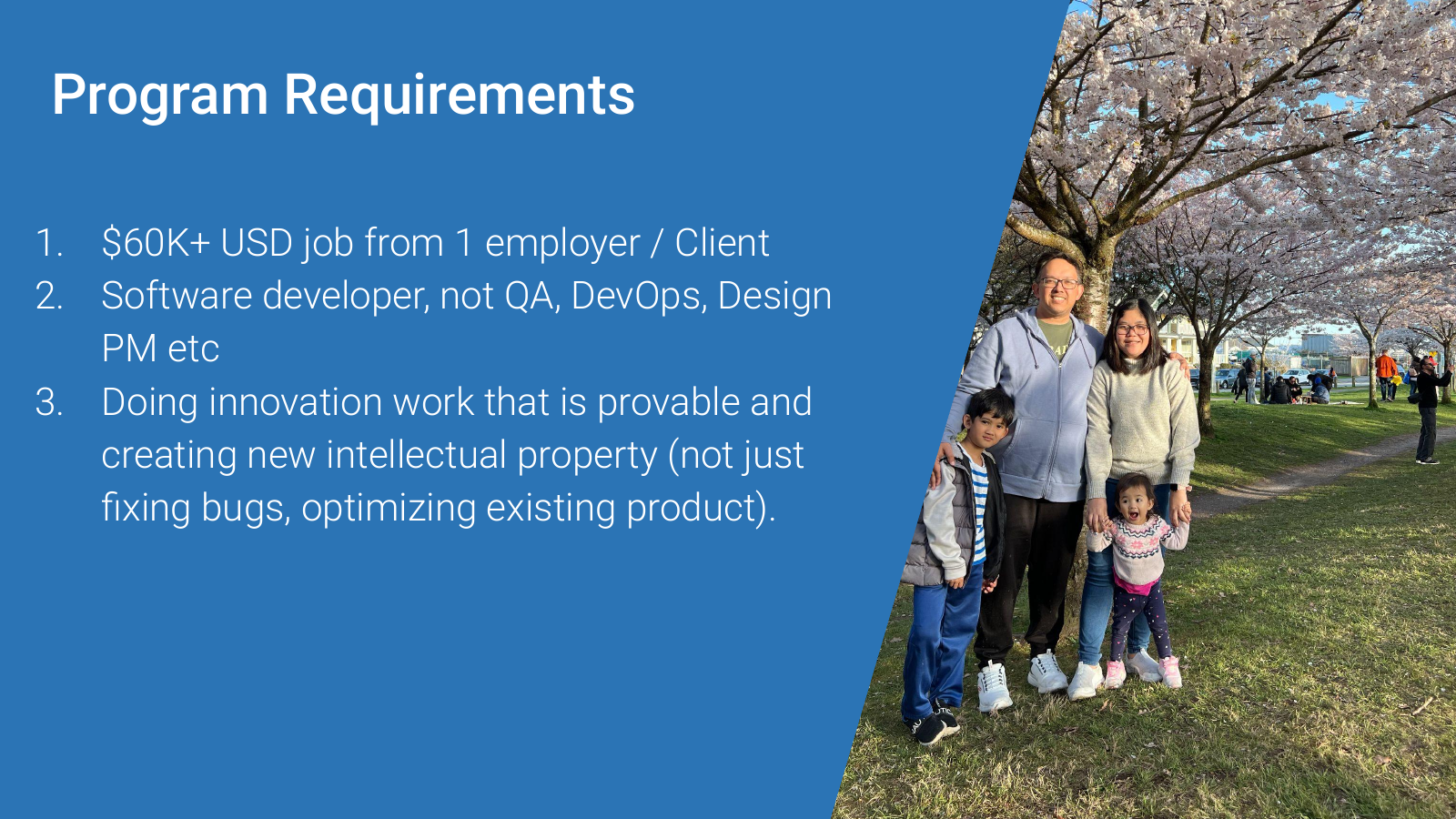
The core eligibility criteria include:
- You are currently working for an international company.
- You earn at least USD 60,000 per year from a single employer or client.
- Your role is within software engineering.
- Your employer is willing to discuss and enter into the required agreement with VanHack.
Eligible software engineering roles can include frontend, backend, full-stack, mobile, machine learning, and AI engineering. Roles outside software engineering may not qualify. Every application is reviewed individually because job responsibilities, salary requirements, employer setup, location, and immigration factors can affect eligibility.
Independent contractors and self-employed professionals may still be considered when the required income comes from one employer or client and that company is open to the program agreement. The program is not structured for applicants combining income from multiple employers.
How does the Move to Canada process work?
1. Submit your application
Start by completing the Move to Canada application. VanHack asks about your current role, country, work arrangement, time with your employer, annual compensation, employer location and size, relocation flexibility, whether you have already discussed the program with your employer, and who is expected to cover the program fees.
2. VanHack reviews your eligibility
The team reviews your application against the program criteria. If your profile is aligned, VanHack schedules a conversation to learn more about your situation and explain the next steps. Submitting an application does not guarantee acceptance or a work permit.
3. Introduce VanHack to your employer
Your employer’s participation is essential. After VanHack approves your profile, you introduce the program to your company and connect the relevant decision-makers with the VanHack team. VanHack then explains the commercial structure, payroll administration, immigration process, and employer responsibilities.
4. Complete the employer and employment agreements
If the employer agrees to proceed, VanHack completes the commercial agreement with the company and prepares the participant’s Canadian employment contract. This formal structure allows the engineer to continue supporting the current employer while being employed in Canada through VanHack.
5. Begin the work permit process
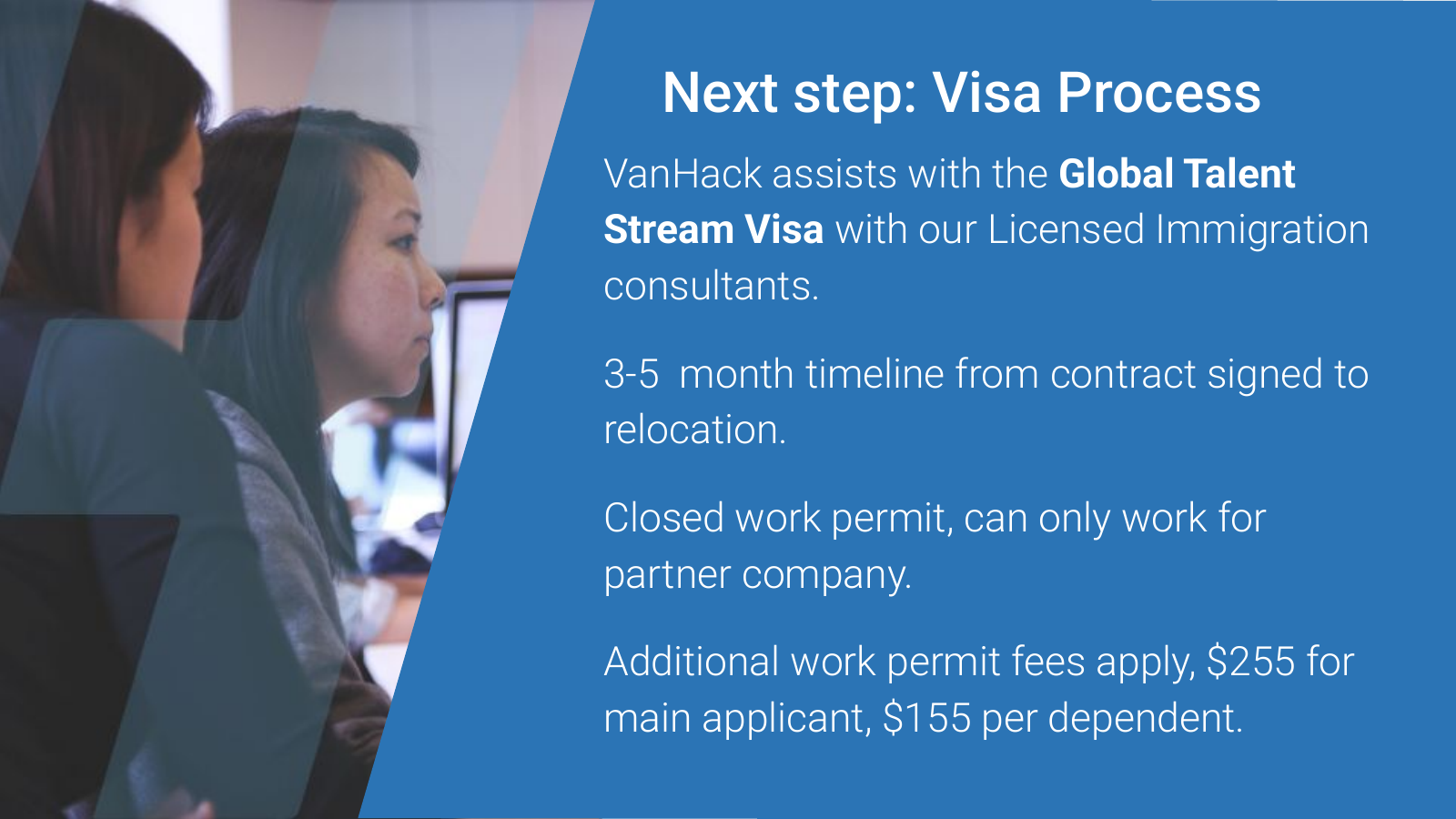
Once the contracts are in place, VanHack’s Global Mobility team supports the participant through the documentation and work permit process. The program currently uses an employer-specific, or closed, Canadian work permit and the Global Talent Stream pathway.
The approval and paperwork stage usually takes around two to three months. VanHack estimates a total relocation timeline of approximately five months, but timing can vary based on the applicant’s country of origin, role, documentation, family situation, and government processing.
What changes after you arrive in Canada?
You continue working remotely with your current company, but VanHack becomes your Canadian employer. Your international employer pays VanHack, and VanHack pays your salary in Canadian dollars on a semi-monthly basis. Canadian payroll deductions and taxes apply.
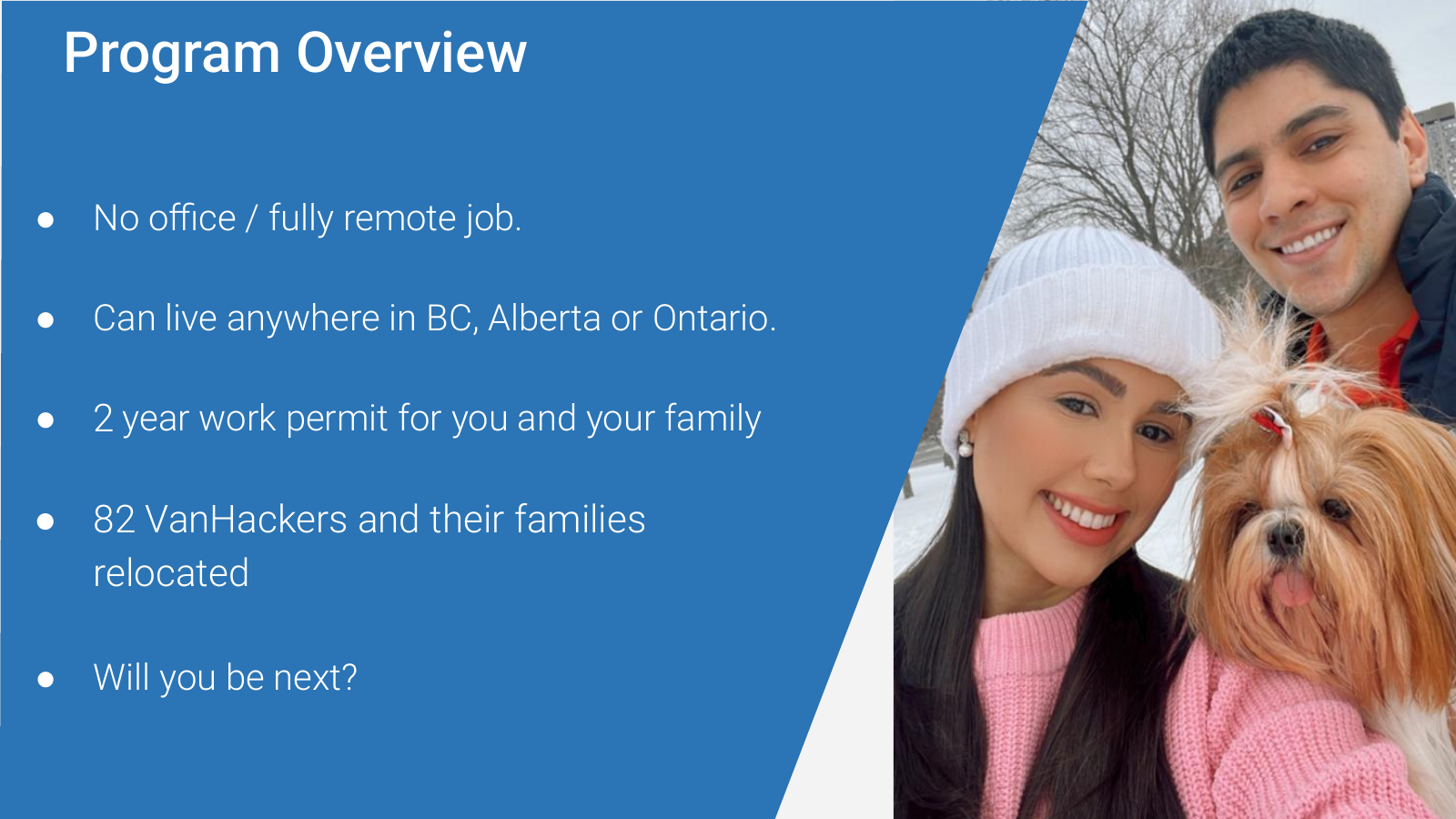
Participants may live in British Columbia, Alberta, or Ontario, subject to the final program and immigration setup. Working from Canada can also create better time-zone alignment with North American teams.
The current program page states that the closed work permit is valid for two years. Because it is employer-specific, the permit is tied to the employer and position named in the immigration approval. If you later want to work for another company, that employer would need to support the appropriate immigration arrangement.
For accompanying family members, the current program guidance says a spouse may be eligible for an open work permit and children may receive study permits. Final eligibility always depends on the family’s specific circumstances and current Canadian immigration rules.
How much does the program cost?
The program page separates company obligations from the participant’s personal costs.
Employer costs
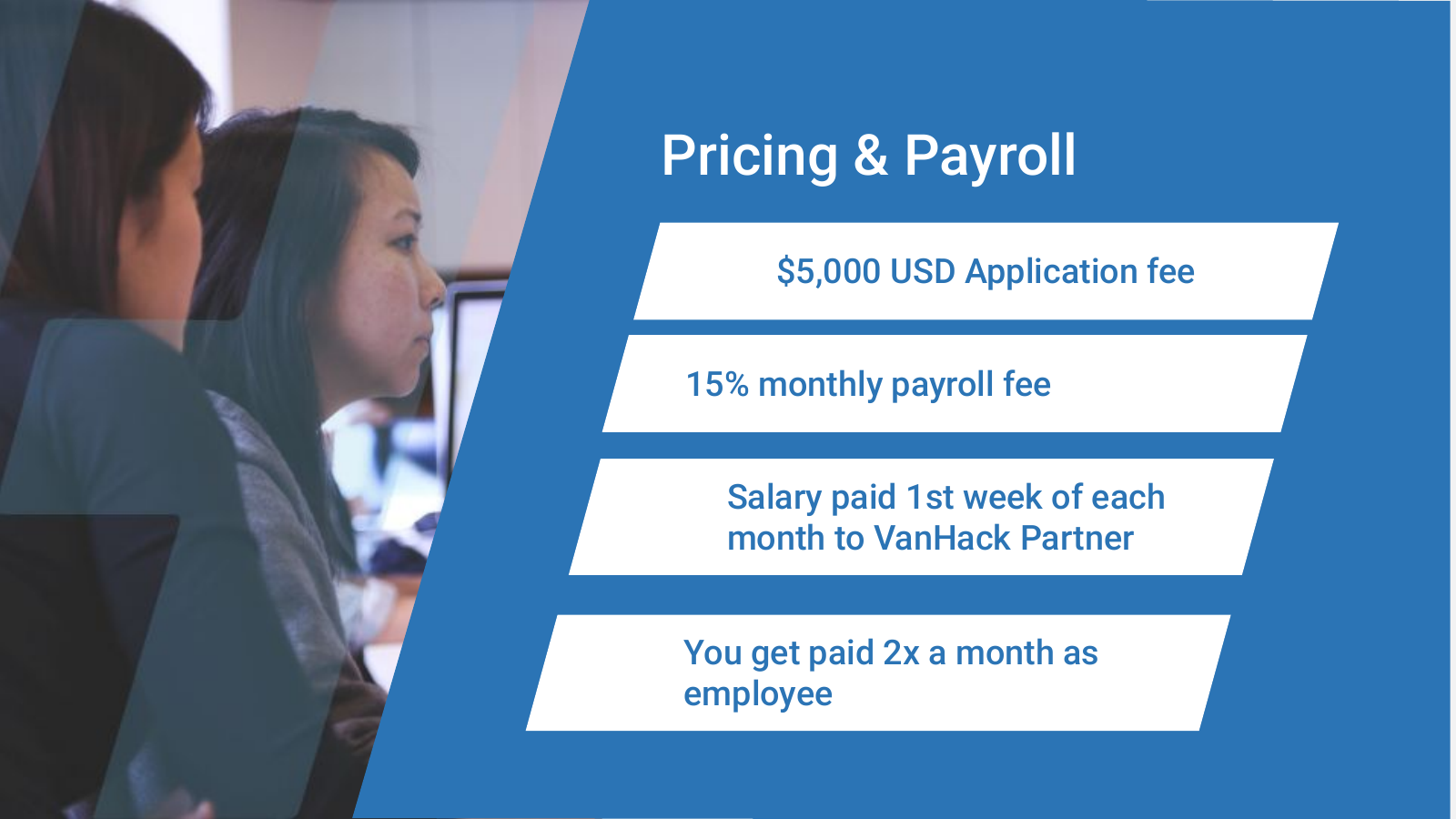
- USD 5,000 one-time application and relocation process fee: paid by the employer for the visa and relocation process managed by VanHack.
- 15% monthly payroll administration fee: paid by the employer on top of the participant’s salary to cover payroll administration, health insurance, and other employment-related costs.
The current program guidance states that the employer must cover these company obligations. They cannot be transferred to the participant.
Participant costs
The participant is generally responsible for personal work permit application fees and relocation expenses such as flights, temporary accommodation, and housing. Government fees can vary based on whether the participant is relocating alone or with family. Some employers may choose to provide additional relocation support, but that is arranged directly between the employer and employee.
Can the program support a future permanent residence application?
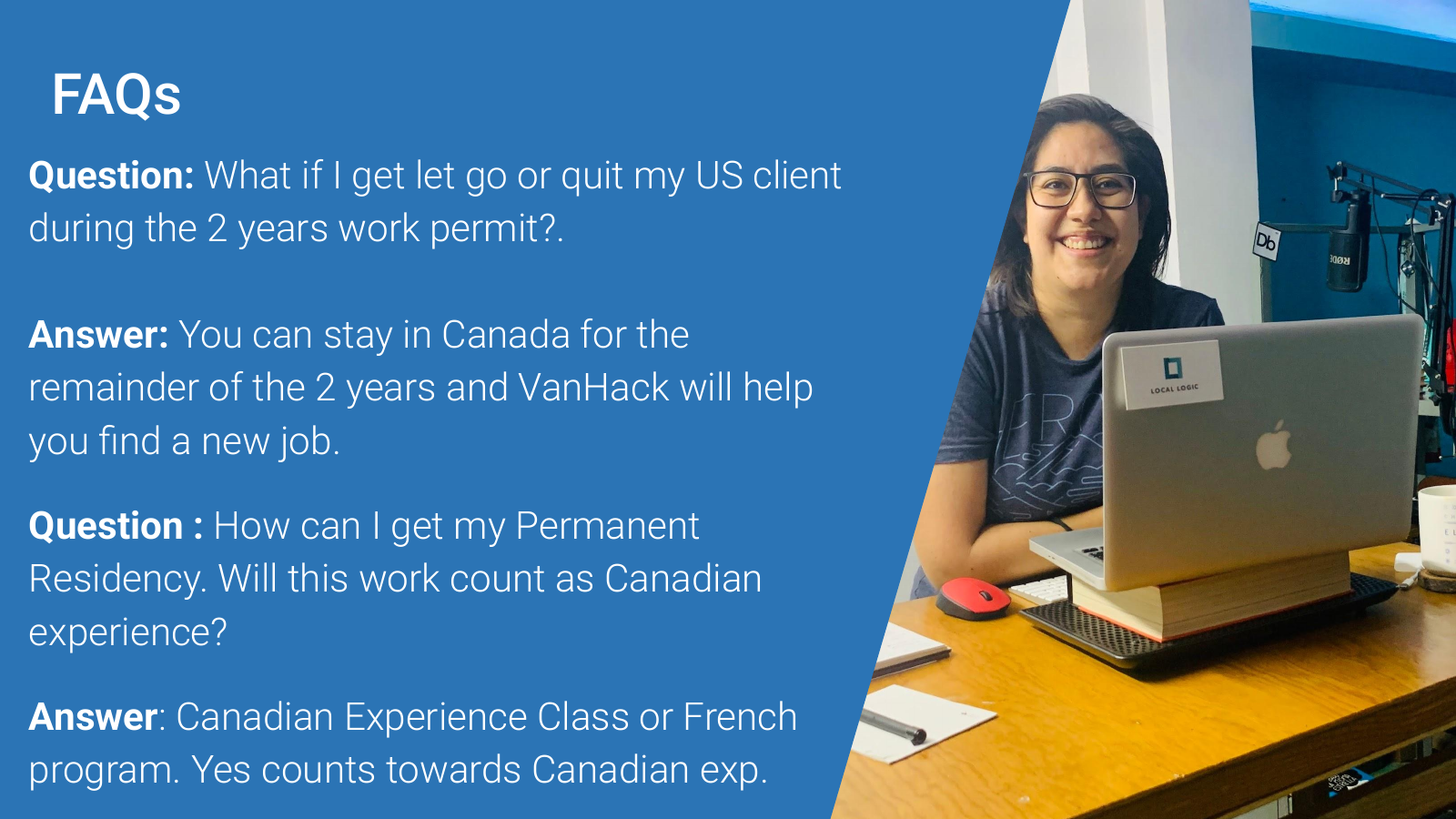
Canadian work experience may help a participant become eligible for permanent residence pathways such as the Canadian Experience Class. The current program guidance says participants may be able to apply after one year of Canadian work experience or when they have enough points through Express Entry.
Permanent residence is not automatic or guaranteed. Eligibility depends on the rules in effect at the time, the applicant’s profile, language results, work experience, points, and other immigration factors. Participants should rely on individualized guidance from qualified immigration professionals.
What happens if your current job ends?
The current program guidance says a participant can remain in Canada for the balance of the valid work permit while looking for a new opportunity. VanHack can help with the job search, but does not guarantee a replacement position.
Because the work permit is employer-specific, starting work for a different company requires the correct immigration authorization. Participants may also become eligible for Canadian Employment Insurance after meeting the government’s required insurable hours and other criteria.
What should you prepare before applying?
You do not need to assemble every immigration document before submitting your initial application, but it helps to have a clear picture of your employment and relocation situation. Be ready to provide:
- Your current job title and responsibilities.
- Your annual compensation in USD from one employer or client.
- Your employer’s website, location, and approximate company size.
- Your current work arrangement and length of employment.
- Whether your employer is open to you working from Canada.
- Whether you have already discussed the program with your employer.
- Your family situation and whether dependants may relocate with you.
Later in the work permit process, typical documents can include passports, marriage or common-law evidence, children’s birth certificates, medical examinations, proof of professional qualifications, and police certificates. The Global Mobility team provides the final document checklist for each case.
Ready to explore your eligibility?
If you are a software engineer earning at least USD 60,000 per year from one international employer and your company may support a move to Canada, the first step is to submit your information for review.
Learn more and apply to VanHack’s Move to Canada Program.
Program terms, fees, processing times, and immigration rules can change. This article is informational and does not constitute legal or immigration advice. Confirm current details with VanHack and a qualified immigration professional before making decisions.